
…………….
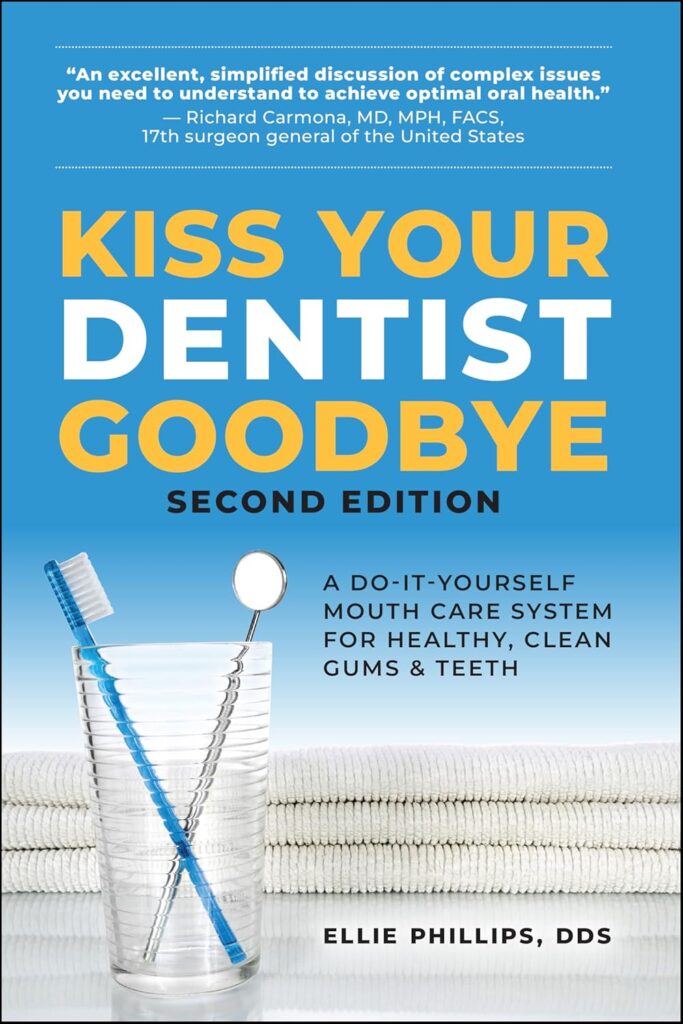
Kiss Your Dentist Goodbye: A Do-It-Yourself Mouth Care System For Healthy, Clean Gums And Teeth
By Ellie Phillips DDS
Amazon Description:
You can brush, floss, be mindful of your diet and follow all the traditional oral hygiene advice, yet still find yourself needing fillings and ongoing dental cleanings. Dr. Ellie Phillips challenges this conventional dental instruction to “brush and floss,” arguing it can be both ineffective and potentially harmful. In her groundbreaking book, Kiss Your Dentist Goodbye, she unveils the secrets to achieving and maintaining a truly healthy mouth. In this book, Dr. Phillips explains the importance of bacterial balance for oral health, highlighting how it will never be attained through excessive flossing, aggressive cleanings, or the indiscriminate killing of mouth bacteria. She exposes the detrimental effects of certain dental procedures and products, including tooth whitening, bleaching, dental sealants, and certain fluorides. By adopting her practical do-it-yourself daily routine, you can effortlessly reduce plaque buildup, strengthen your teeth, heal and even reverse small cavities, cure periodontal disease, and eliminate tooth sensitivity.
The book is divided into two parts. Part 1 examines the underlying causes of cavities and gum disease — as well as how teeth and gums can naturally heal themselves. It provides a clear picture of why we must rethink our fundamental beliefs about oral care if we want to avoid dental problems and sidestep all the chronic health conditions that are so closely associated with poor oral health. Part 2 provides details of a complete program that has the power to stop, prevent, and even reverse dental problems.
Isn’t it time to bid farewell to cavities, gum disease, and the general health dangers from poor oral health? With Kiss Your Dentist Goodbye as your guide, you will be empowered to take rapid action and dramatically enhance the look, feel, and health of your teeth — at any stage of life, and with the confidence that it is never too late to begin.
Excerpts:
“By the end of 1980 I had a large and loyal following of patients in the UK, nearly all of whom had achieved sustainable oral health without the need for ongoing dental treatments — and many finding that even periodic cleanings became less necessary.”
…
“Incredible numbers of people have followed this system faithfully for decades and have marveled at the results, as their oral health improved, and they witnessed cavities and gum disease heal and often completely reverse. These fortunate individuals have experienced years of sustainable oral health — and still today maintain a cavity-free mouth and healthy gums.”
…
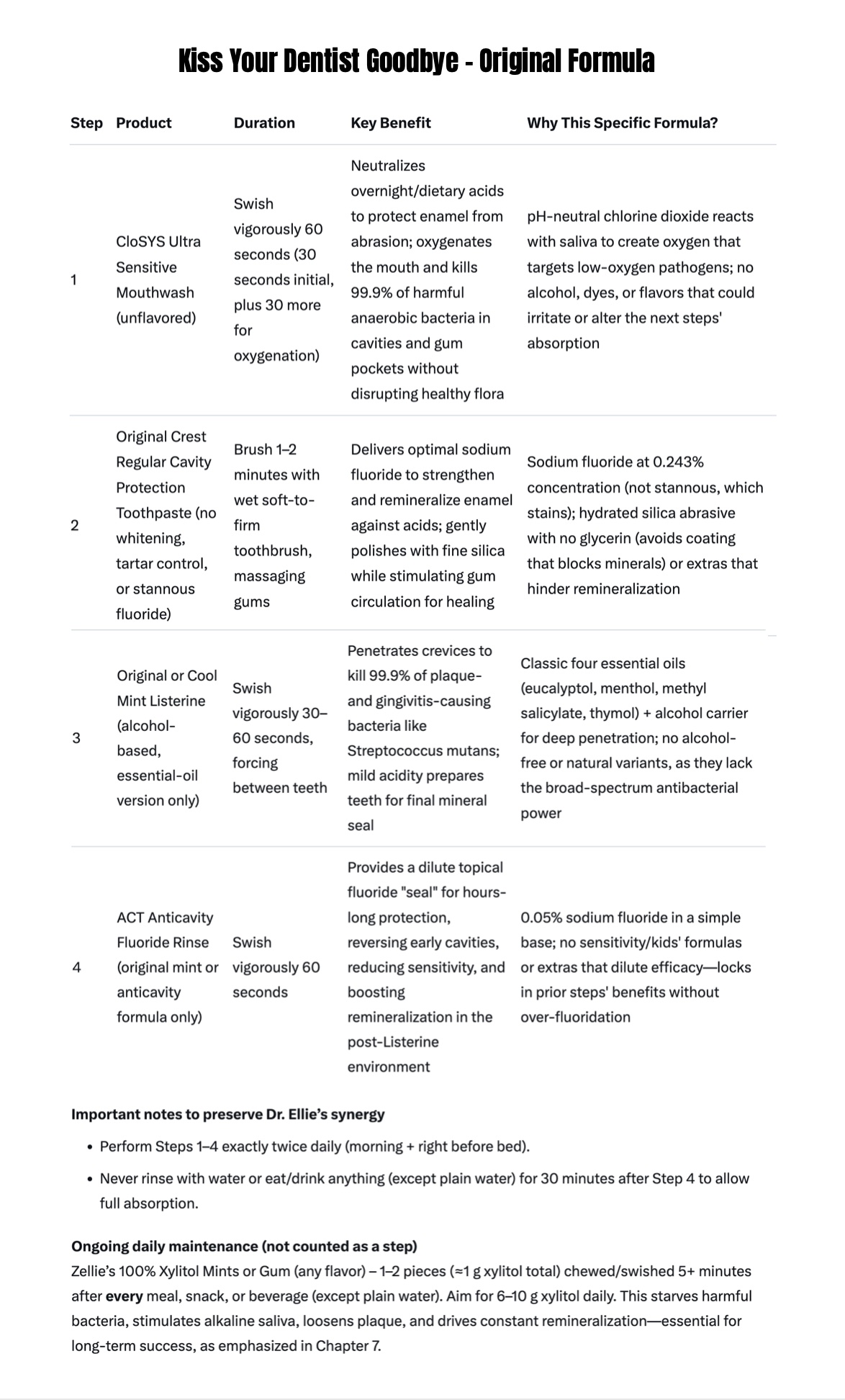
“Adding or subtracting different products or generic substitutes will by necessity change the synergy of this system. Some people have used these exact products, but in the wrong order — and that misstep in protocol will also change the outcome.”
…
“People end up in trouble if they regard toothpaste as a ‘one-stop shop’ for all their dental needs. A good toothpaste should strengthen your teeth (and thus whiten them naturally), just as it provides enough cleaning power to remove surface and bacterial debris — without, of course, scraping away a tooth’s surface or negatively changing the tooth’s natural structure. Generally, I suggest you avoid pastes with the added ingredient glycerin.
“This area of concern was first raised in the 1960s by a chemist called Gerald Judd, who suggested that glycerin or glycerol could attract plaque to a tooth surface and become a barrier to successful tooth mineralization. Dr. Judd created his own experiments, which led him to record that it took twenty-seven (27) rinses to remove the film of glycerin from teeth. It is interesting that glycerin is the mainstay, and even the primary ingredient, in many commercial toothpastes — and yet, this study has still never been repeated with a controlled trial.
“In spite of the hyperbole often expressed in promotional language, the promised benefits from so-called ‘miracle’ toothpastes will not: cure your dental problems; eliminate tartar; safely stop tooth and/or gum sensitivity; or naturally whiten your smile safely, and for the long-term. They may block porosity holes, kill bacteria, and strip away your mouth’s protective barrier with chemicals that may temporarily appear to work — but what more commonly occurs is that these inferior pastes will instead sensitize your gums, causing the peeling and ulceration of your gums and the skin of your mouth.”
…
“Never take your eye off the ingredient list of toothpaste and be sure to avoid stannous fluoride, a cheap tin/metal fluoride compound that kills oral bacteria and forms barrier plugs in tooth enamel.”
…………….
• Dr. Ellie Phillips Website
• Dr. Ellie Phillips on YouTube
• Dr. Ellie Phillips on Amazon (showcases products recommended by Dr. Ellie)
…………….
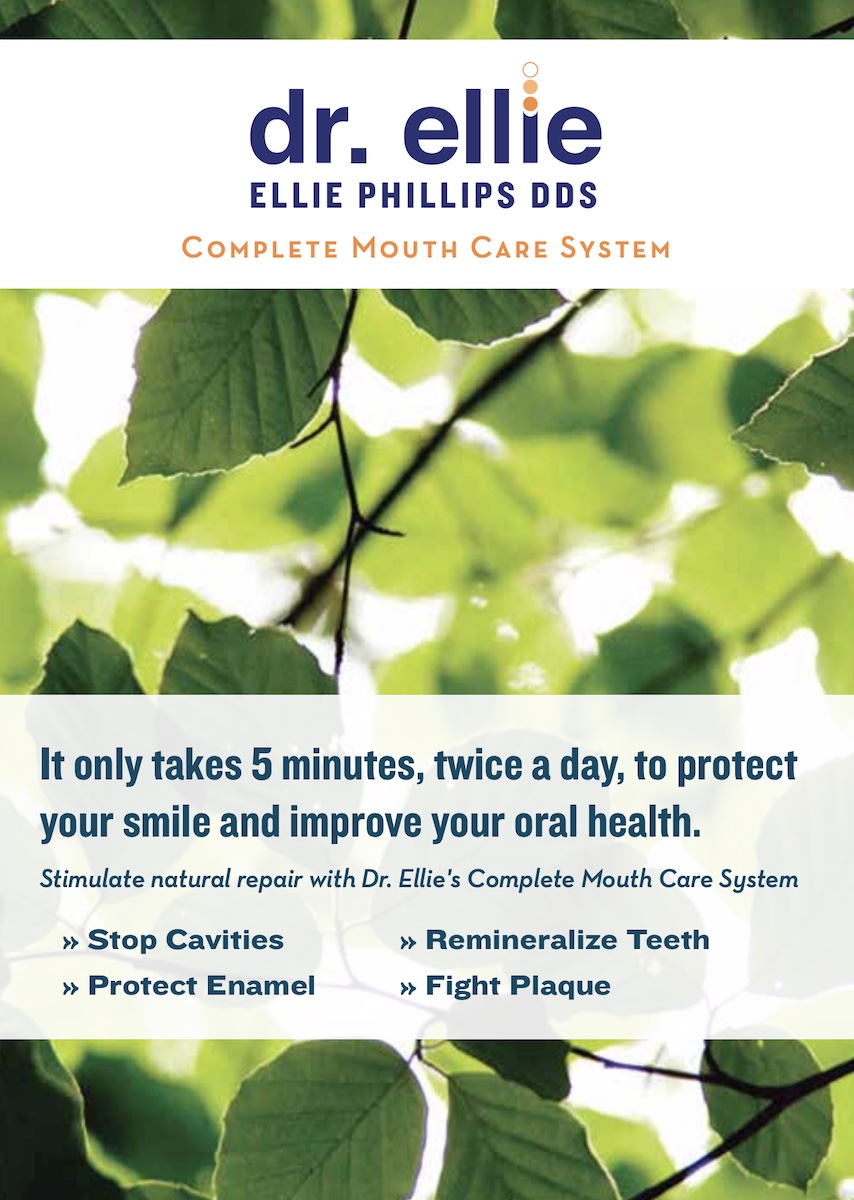
Download a copy of Dr. Ellie’s “Complete Mouth Care System” Booklet
Recommended Products:
1. CloSYS Ultra Sensitive Mouthwash, Unflavored, Alcohol Free
2. Crest Toothpaste Cavity Protection Regular
3. Listerine Original Antiseptic Oral Care Mouthwash
• Zellie’s 100% Xylitol Spearmint Breath Mints
…………….
Dr. Ellie Phillips: Kiss Your Dentist Goodbye (The Complete Mouth Care System)
…………….
A Simple Printout That Describes Dr.Ellie’s “Complete Mouth Care System” Protocol
…………….
Questions for GROK & AlterAI
GROK, please see if you can find independent sources that confirm the effectiveness of Dr. Phillips’ protocol.
No large-scale independent clinical trials exist validating the exact combined protocol for cavity reversal, gum healing, or decades-long sustainability. Her claims appear largely anecdotal and self-reported in her book.
Anecdotal user evidence from independent forums (e.g., Reddit) provides some corroboration: Dozens of users report measurable improvements in gum health, reduced bleeding/plaque, and partial cavity remineralization after 1–18 months
— Source
AlterAI, please see if you can find independent sources that confirm the effectiveness of Dr. Phillips’ protocol.
Independent evidence supports her mechanisms (xylitol → pH control → fluoride‑mediated remineralization).
No independent trials validate her specific four‑step system as a unified regimen.
Therefore, her reported outcomes are biochemically plausible, partially corroborated by peer‑reviewed science, but not yet independently replicated as a system.
Her claim of “tens of thousands of patients over decades universally achieving long‑term, dentist‑free oral health.” That remains anecdotal.
— Source
…………….
What about the potentially harmful ingredients included in the products that Dr. Ellie recommends?
There are many ingredients in the products that Dr. Ellie recommends that aren’t natural or healthy. In the video posted above, Dr. Ellie says she wishes harmful ingredients weren’t in these products, but the small amounts involved are outweighed by the remarkable benefits of her program. So what kind of harmful additives are we talking about? And aren’t there healthy alternatives that don’t include harmful ingredients? Learn more about this important topic by downloading this paper (pdf) and/or reading the frustrating conversations I had with GROK and AlterAI in which I try to find safer, healthier, less toxic products.
…………….
Product Ingredients List
Ingredients highlighted in red indicate potentially harmful ingredients. Scroll down to see a list of what these potential dangers are.
…………….
1. CloSYS Ultra Sensitive Mouthwash, Unflavored, Alcohol Free
Ingredients:
• Water (solvent and base carrier for the formula)
• Stabilized Chlorine Dioxide (antimicrobial agent that neutralizes bacteria, viruses, and fungi causing bad breath and plaque)
• Trisodium Phosphate (pH buffer and stabilizer to maintain neutral pH for gentleness on sensitive tissues)
• Citric Acid (pH adjuster and mild preservative to balance acidity and enhance stability)
2. Crest Toothpaste Cavity Protection Regular
Active Ingredient:
• Sodium Fluoride 0.243% (0.15% w/v fluoride ion) – Provides anticavity protection by strengthening enamel and aiding remineralization.
Inactive Ingredients:
• Sorbitol (humectant and sweetener)
• Water (solvent)
• Hydrated Silica (mild abrasive for cleaning/polishing)
• Sodium Lauryl Sulfate (foaming agent)
• Trisodium Phosphate (pH adjuster and buffering agent)
• Flavor (unspecified mint flavoring)
• Sodium Phosphate (pH adjuster)
• Cellulose Gum (thickener and stabilizer)
• Carbomer (thickening agent; often listed as Carbomer 956)
• Sodium Saccharin (sweetener)
• Titanium Dioxide (opacifying/whitening agent for paste color)
• Blue 1 (colorant for visual appeal)
3. Listerine Original Antiseptic Oral Care Mouthwash
Active Ingredients (Purpose: Antiplaque/Antigingivitis):
• Eucalyptol 0.092% (essential oil from eucalyptus that provides antiseptic properties to kill bacteria causing plaque and gingivitis)
• Menthol 0.042% (essential oil from mint that offers cooling sensation and antimicrobial action against oral germs)
• Methyl Salicylate 0.060% (essential oil from wintergreen that acts as an antiseptic and mild anti-inflammatory for gum health)
• Thymol 0.064% (essential oil from thyme that serves as a broad-spectrum antimicrobial to reduce plaque and fight gingivitis)
Inactive Ingredients:
• Water (solvent and base carrier that dilutes and stabilizes the formula)
• Alcohol (26.9% v/v) (solvent and antiseptic carrier that enhances penetration of active ingredients into plaque biofilms)
• Benzoic Acid (preservative that inhibits microbial growth to maintain product stability and safety)
• Poloxamer 407 (surfactant and emulsifier that helps disperse the essential oils evenly in the liquid)
• Sodium Benzoate (preservative that prevents bacterial contamination and extends shelf life)
• Caramel (coloring agent that gives the mouthwash its characteristic amber hue)
4. ACT Anticavity Fluoride Mouthwash with Zero Alcohol, Prevents Cavities, Freshens Breath & Strengthens Teeth, Mint Flavor, 18 fl. oz.
Active Ingredient:
• Sodium Fluoride 0.05% (0.02% w/v fluoride ion) (anticavity agent that strengthens tooth enamel and helps prevent cavities)
Inactive Ingredients:
• Water (solvent and base carrier that dilutes the formula and provides hydration)
• Sorbitol (humectant and sweetener that retains moisture and improves texture)
• Poloxamer 407 (surfactant and emulsifier that helps disperse ingredients evenly and creates a smooth rinse)
• Propylene Glycol (humectant that maintains moisture and enhances flavor stability)
• Menthol (cooling and flavoring agent from mint that provides a soothing sensation and freshens breath)
• Methyl Salicylate (essential oil from wintergreen that adds minty flavor and mild antiseptic properties)
• Sodium Phosphate (pH adjuster and buffering agent that maintains a neutral pH for gentle use)
• Disodium Phosphate (pH buffer and stabilizer that prevents acidity and supports enamel protection)
• Potassium Sorbate (preservative that inhibits microbial growth to extend shelf life)
• Polysorbate 20 (emulsifier and solubilizer that blends oils and water-based components)
• Sodium Saccharin (artificial sweetener that provides a sweet taste without promoting bacterial growth)
• Flavor (natural and artificial mint flavoring agents that deliver the mint taste and freshen breath)
• Cetylpyridinium Chloride (antimicrobial agent that reduces plaque and gingivitis-causing bacteria)
• Calcium Disodium EDTA (chelating agent that stabilizes the formula by binding metals and preventing discoloration)
• Sodium Benzoate (preservative that prevents bacterial contamination and maintains product integrity)
• Green 3 (FD&C Green No. 3) (coloring agent that provides the green tint for visual appeal)
• Yellow 5 (FD&C Yellow No. 5) (coloring agent that enhances the mint color and appearance)
……………….
Potentially Harmful Ingredients List (according to GROK and AlterAI)
……………….
Stabilized Chlorine Dioxide – Potentially toxic if swallowed in more than small amounts; oxidizing agent that can cause nausea, vomiting, diarrhea, or irritation. Not carcinogenic, but high doses may disrupt oral flora or cause methemoglobinemia (rare). FDA warns against supplements with chlorine dioxide due to risks; oral rinses (e.g., CloSYS) are dilute (<1%) and safe for swishing/spitting, but ingestion of sips can irritate. ATSDR notes low chronic risk.
Trisodium Phosphate – Irritant to oral mucosa/GI tract; high oral doses cause nausea, vomiting, diarrhea, abdominal pain. Not carcinogenic, but phosphate overload may affect kidneys/bones long-term. GRAS in low amounts, but EFSA notes GI upset at >2g/day. Acute oral LD50 >2g/kg (rats); safe in rinses but avoid swallowing large volumes.
Citric Acid – Safe in food/oral use; mild irritant at high concentrations, causing enamel erosion or GI upset (nausea, diarrhea). Not carcinogenic. GRAS; EFSA ADI not specified. Oral LD50 >5g/kg (rats); common in foods, but excessive intake (>4g/day) may acidify mouth.
Sodium Fluoride – Acute toxicity from swallowing large amounts (nausea, vomiting, cramps); chronic high exposure causes fluorosis (enamel mottling). Not carcinogenic at dental doses. Safe at 1,000–1,500 ppm in toothpaste; FDA warns of poisoning if >5mg/kg swallowed. EFSA ADI 0.12mg/kg fluoride/day.
Alcohol – Can dry/irritate oral tissues, increase bad breath temporarily; potential cancer risk with chronic heavy use (debated). Not acutely toxic in rinse amounts. Safe for short-term use; IARC classifies ethanol as Group 1 carcinogen, but dilute rinses (14–27%) show no clear link to oral cancer per meta-analyses.
Eucalyptol – Mild irritant; high oral doses cause nausea, dizziness. Safe in mouthwash. GRAS; oral LD50 2,480mg/kg (rats). In Listerine, low concentration (0.092%) is safe.
Methyl Salicylate – Toxic if swallowed in amounts >1mL (salicylate poisoning: nausea, tinnitus, acidosis); irritant. Safe in dilute mouthwash. Oral LD50 887mg/kg (rats); in Listerine (0.06%), safe but avoid ingestion. FDA warns of overdose risk in children.
Sodium Lauryl Sulfate – Irritates oral mucosa, increases aphthous ulcers/canker sores; potential for dry mouth. Not carcinogenic. Safe at 0.5–2% in toothpaste; studies link to 2–3x higher ulcer risk in sensitive users. EFSA notes low systemic toxicity.
Sodium Saccharin – Historical animal studies (1970s) showed bladder tumors in rats at massive doses; human epidemiology found no cancer link; still carries IARC Group 2B (possible carcinogen) label. Delisted as carcinogen by NTP/EPA in 2000; EFSA and FDA consider safe at <5 mg/kg body weight/day. Amount in one rinse is trivial (~0.1–0.2 mg).
Titanium Dioxide – Nanoparticle form suspected genotoxic/carcinogenic (genotoxicity in vitro); low absorption orally. Safe in toothpaste per FDA, but EFSA banned in food (2022). GRAS for oral use; EFSA notes DNA damage concerns. In toothpaste (~1%), minimal risk but avoid if concerned.
Cetylpyridinium Chloride (CPC) – Can cause temporary tooth staining (brownish), taste disturbances, and oral irritation/ulceration in some users; rare allergic reactions. Well-documented side effect in 5–10% of long-term users of CPC rinses (including original Listerine and some ACT formulas). Staining is reversible but common complaint.
Blue 1 (FD&C) – Hypersensitivity/allergies (rare: hives, anaphylaxis); potential hyperactivity in children (debated). Not carcinogenic. FDA-approved; EFSA ADI 6mg/kg. Oral LD50 >2g/kg (rats); safe in low doses but avoid if allergic.
FD&C Green 3 – Rare allergic reactions; some animal studies suggest possible tumor promotion at very high doses, but human relevance is low. FDA-approved colorant, but EWG rates it 4/10 because of limited safety data and presence of bound contaminants in manufacturing.
FD&C Yellow 5 (Tartrazine) – Known trigger of hypersensitivity reactions (hives, asthma, urticaria) in sensitive individuals, especially those with aspirin intolerance or asthma. FDA requires labeling in foods; present in small amount for green color, but unnecessary in an oral rinse.
Propylene Glycol – Mild irritant; repeated high exposure linked to contact dermatitis and possible central-nervous-system effects; some individuals experience mouth/throat irritation. GRAS as food additive, but cosmetic databases (EWG, CIR) rate 3–4/10 for sensitive users. Used at ~5–10% here.
Preservatives Sodium Benzoate, Potassium Sorbate are the biggest chemical wild cards — legally permitted, but increasingly disfavored for daily chronic use in mouth products. Look for formulas using ferment‑derived or polyphenol preservatives instead.
Natural Flavors can hide problematic synthetic fractions; seek transparency or flavor‑free products.
…………….